
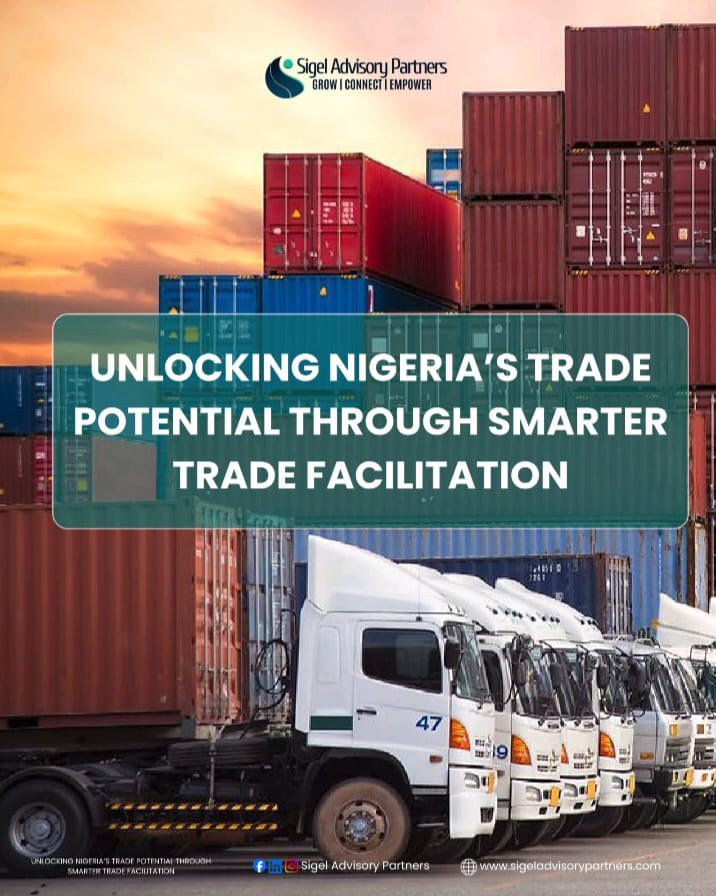
Nigeria remains one of Africa’s most strategically positioned economies. With a population exceeding 200 million, abundant natural resources, and access to both regional and global markets, the country possesses the core fundamentals required to emerge as a leading trade and investment hub. Across critical sectors, Nigeria continues to attract significant investment interest driven by scale, demand, and long-term growth potential.
However, the realization of this potential depends not only on market size or resource endowment, but on the efficiency, predictability, and execution quality of the systems that support trade and investment. Without effective trade facilitation, regulatory complexity, extended approval timelines, and high import costs can materially undermine project viability and investor confidence.
At the center of this conversation is trade facilitation—a strategic tool that directly influences investment outcomes, project execution, and national competitiveness.
Trade Facilitation as a Board-Level Consideration
Trade facilitation extends beyond customs clearance or procedural compliance. At a strategic level, it encompasses fiscal incentives, tariff regimes, regulatory approvals, and institutional coordination mechanisms designed to reduce the cost, time, and uncertainty associated with cross-border trade.
For boards, investors, and senior management, trade facilitation directly impacts capital allocation decisions, project timelines, and return on investment. High import duties, regulatory delays, and administrative inefficiencies can significantly alter project economics. Conversely, when effectively leveraged, trade facilitation instruments such as Import Duty Exemption Certificates (IDECs) improve project feasibility, enhance execution speed, and strengthen long-term competitiveness.
As a result, trade facilitation is increasingly recognized as a board-level strategic consideration, particularly for capital-intensive and import-dependent projects.
The Business Development Reality: Strategy Meets Execution
While trade facilitation frameworks exist, translating policy intent into measurable commercial outcomes requires disciplined execution. Business development teams operate at the intersection of policy, regulation, and commercial strategy, navigating evolving guidelines, multiple approving authorities, and sector-specific requirements.
In practice, securing concessionary waivers and IDECs involves:
• Comprehensive and defensible documentation
• Continuous engagement with relevant Ministries, Departments, and Agencies (MDAs)
• Alignment with sectoral policies and national development objectives
• Active management of regulatory feedback and approval timelines
This execution effort is often unseen, yet it is fundamental to ensuring that trade facilitation instruments deliver their intended economic impact. Trade facilitation, therefore, is only as effective as the business development capability supporting its execution.
Cost Optimization and Commercial Impact
From a business development perspective, trade facilitation represents a critical cost-optimization lever. Instruments such as IDECs reduce the landed cost of imported machinery, equipment, and production inputs, thereby improving project economics.
When effectively implemented, these instruments:
• Improve cash flow and capital efficiency
• Enhance project bankability
• Reduce cost pressures during early implementation stages
• Enable reinvestment into growth, operations, and workforce development
For project sponsors and investors, this translates into tangible, sustainable commercial value.
Sector-Specific Implications
Trade facilitation delivers targeted value across Nigeria’s priority and import-dependent sectors:
Oil and Gas
Oil and gas projects depend on specialized imported machinery, equipment, and technical components across upstream, midstream, and downstream operations. Effective use of IDECs reduces import-related costs, improves capital efficiency, and supports timely project execution in a highly regulated and capital-intensive sector.
Machinery and Equipment
Industrial projects across multiple sectors rely on imported machinery and heavy equipment not readily available locally. Trade facilitation enables cost-efficient access to these assets, improves operational readiness, and supports faster commissioning and deployment.
Manufacturing and Packaging
Manufacturing and packaging operations require imported production lines, spare parts, and processing equipment. IDECs improve production competitiveness by reducing landed costs, supporting scale-up, enhancing export readiness, and strengthening Nigeria’s industrial base.
Wind and Solar Turbines
Renewable energy projects depend on imported turbines, panels, inverters, and balance-of-plant equipment. Trade facilitation plays a critical role in improving project viability, supporting clean energy deployment, and advancing Nigeria’s energy transition and sustainability objectives.
Healthcare Equipment
Healthcare delivery relies on imported medical equipment, diagnostic tools, and specialized devices. Duty exemptions reduce procurement costs, support healthcare infrastructure expansion, and improve access to modern medical technology across public and private institutions.
The Role of Sigel Advisory Partners
Sigel Advisory Partners plays a central role in operationalizing trade facilitation by bridging regulatory frameworks with commercial execution. The firm supports eligible organizations across strategic sectors by delivering end-to-end IDEC facilitation, combining regulatory expertise, stakeholder advocacy, and disciplined execution.
Sigel’s role extends beyond advisory into structured implementation. The firm supports clients through IDEC documentation, application processing, stakeholder engagement, regulatory coordination, and post-approval execution support, ensuring that trade facilitation instruments translate into measurable cost savings and improved project outcomes.
At the documentation stage, Sigel works closely with clients to compile robust and defensible IDEC submissions, aligning technical specifications, financial justifications, and project narratives with Customs & Excise Tariff provisions and sector-specific policies. This structured approach reduces ambiguity and strengthens regulatory confidence.
Through proactive stakeholder advocacy and representation, Sigel engages relevant MDAs on behalf of clients, facilitates transparent communication, manages regulatory feedback, and supports timely approvals. The firm’s established institutional relationships enable effective coordination across approval stages.
Sigel also provides application tracking and execution support, monitoring progress, coordinating responses, and supporting clients through approval and post-approval implementation. This ensures IDECs are correctly applied during importation, minimizes clearance challenges, and enables clients to fully realize approved benefits.
With multidisciplinary expertise, nationwide reach, and experience across oil and gas, manufacturing, renewable energy, machinery, and healthcare sectors, Sigel Advisory Partners transforms regulatory complexity into a strategic advantage—supporting investment viability, operational efficiency, and long-term growth.
Strategic Outlook
As Nigeria advances its economic diversification and industrial development agenda, effective trade facilitation will play an increasingly critical role. For boards, investors, and project sponsors, recognizing both the opportunity and execution complexity involved in trade facilitation is essential.
Smarter trade facilitation supported by strong business development capability enhances competitiveness, improves investment outcomes, and supports sustainable economic growth. Through strategic advisory and disciplined execution, Sigel Advisory Partners continues to play a pivotal role in translating policy frameworks into viable commercial opportunities.
Follow us on our social media platforms.
